
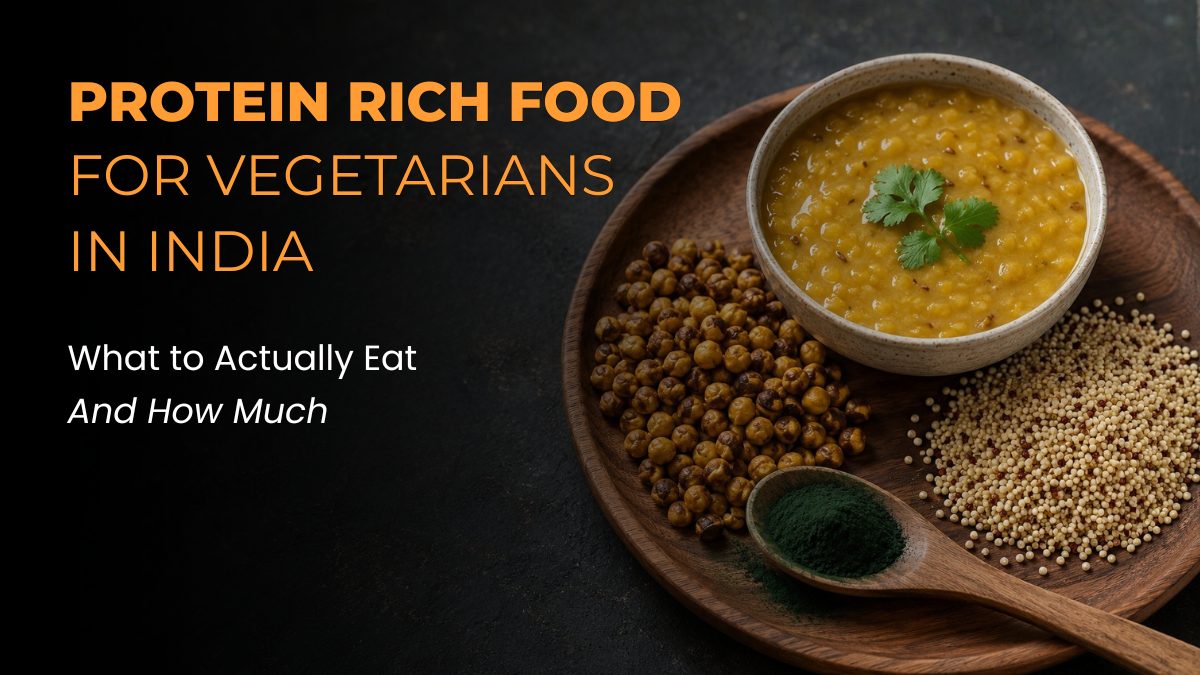
The average Indian vegetarian diet runs on rice, roti, and dal. That combination is not a protein problem in theory — dal is a legitimate protein source. In practice, the portions are wrong. A standard katori of cooked dal delivers roughly 5–7g of protein. The ICMR-NIN recommends 1g of protein per kg of body weight per day for Indians eating cereal-based diets — which means a 60kg person needs 60g daily. Two katoris of dal, two rotis, and a cup of rice gets you to perhaps 25–30g. The gap between what most Indian vegetarians eat and what their bodies actually need is real, consistent, and fixable without protein powder.
Quick Answer: The highest protein vegetarian foods available in India are chana dal (22g per 100g dry), soy products (36–40g per 100g), spirulina (57g per 100g), pea protein isolate (80g+ per 100g), quinoa (14g per 100g cooked), and hemp seeds (31g per 100g). Most Indian vegetarians are short on protein not because good sources are unavailable but because portions are too small and variety is too limited. The fix is adding 2–3 high-protein foods to what you already eat — not replacing your diet or buying supplements.
How Much Protein You Actually Need — the Indian-Specific Number
Global protein recommendations typically cite 0.8g per kg of body weight. The ICMR-NIN Nutrient Requirements 2020 (PDF) sets the Indian RDA higher — at 0.83g per kg for healthy adults consuming high-quality protein, and 1g per kg for people eating predominantly cereal-based diets. Most Indian vegetarians fall into the latter category. Dal, roti, and rice are cereal-based. The protein quality of plant foods is lower than animal protein in terms of amino acid completeness — which is why the recommendation is higher, not lower, for vegetarians.
What this means in practice: a 60kg woman needs approximately 60g of protein daily. A 75kg man needs 75g. Most Indian vegetarians consuming standard portions of dal and sabzi are getting 30–40g. The shortfall is not dramatic enough to cause acute deficiency symptoms most of the time — but it is enough to cause fatigue, slower muscle recovery, hair thinning, and reduced immunity over months and years of consistent under-eating.
The ICMR-NIN's Dietary Guidelines for Indians 2024 (PDF) — Guideline 8 specifically — recommends obtaining good quality protein through appropriate food combinations rather than supplements, citing the risks of prolonged high-dose protein powder consumption including kidney stress and bone mineral loss. The solution the guidelines recommend is exactly what this post covers: combinations of complementary plant proteins that together provide complete amino acid profiles.
The Protein Numbers Every Indian Vegetarian Should Know
These are dry weight figures unless stated otherwise — relevant for how you buy and store, not how you cook. Cooked values are approximately 30–40% lower due to water absorption.
Chana dal leads the readily available Indian legumes at approximately 22g protein per 100g dry weight. Moong dal follows at 24g. Masoor dal at 25g. Urad dal at 26g. These are the foundations of the Indian vegetarian protein story and they are genuinely good sources — the problem is almost never the food, it is the portion. A standard katori of cooked dal is 150–200g cooked, which represents roughly 50–60g dry dal, delivering 12–15g of protein. Two katoris at two meals puts you at 24–30g from dal alone — a solid base, but not sufficient by itself for most adults.
Soy is the highest protein whole food available in Indian kitchens at approximately 36g per 100g dry. Tofu delivers 8–10g per 100g in its cooked form, which is lower but still meaningful if portions are generous. Soy milk, soy chunks (nutrela), and edamame are all viable formats. The concern about soy and hormonal disruption is widely overstated in the research — the phytoestrogens in soy behave very differently from human oestrogen, and multiple large reviews have found no adverse hormonal effects from moderate soy consumption in healthy adults.
Spirulina is a category apart. At approximately 57g of protein per 100g, it has one of the highest protein concentrations of any food — plant or animal. The practical serving size is 5–10g daily (one teaspoon), which delivers 3–6g of protein — not transformative on its own, but a meaningful addition when combined with other sources. More importantly, spirulina is a complete protein — it contains all nine essential amino acids, which is rare in plant foods and makes it particularly valuable for vegetarians. It also delivers iron and B12 precursors. The taste is strong and requires a carrier — a smoothie, a glass of water with lemon, or stirred into a chutney works. Browse PureStora's Health & Wellness range for certified spirulina powder options.
Quinoa is the only grain that is a complete protein — all nine essential amino acids in a single food. At 14g per 100g cooked it is not dramatically higher than dal, but its amino acid completeness is the point. Replacing white rice with quinoa in one meal daily is one of the simplest structural protein improvements available to an Indian vegetarian, with no change to meal format. Two quinoa products are available on PureStora — Ecotyl Quinoa White (500g) and whole grain quinoa seeds — both from Food & Beverages.
Pea protein isolate and soy protein isolate are concentrated formats — 80g+ protein per 100g — for people who need to close a significant protein gap efficiently. These are not the same as the whey-heavy gym supplements marketed aggressively online. Pea protein specifically has a good amino acid profile for a plant isolate, is hypoallergenic, and digests well. PureStora carries both Pea Protein Isolate and Soy Protein Isolate in the Health & Wellness range — for anyone who wants a clean, plant-based concentrated source without the additives in commercial protein powders.
The Complementary Protein Principle — Why Dal-Roti Works Better Than Either Alone
Plant proteins are described as "incomplete" because most lack one or more essential amino acids in adequate quantities. Cereals are low in lysine. Legumes are low in methionine. When you eat them together — dal and roti, rice and rajma, khichdi — the amino acid profiles complement each other. You get a complete protein from the combination even though neither food provides it alone.
This is the nutritional logic behind virtually every traditional Indian meal combination. Dal-chawal. Dal-roti. Rajma-rice. Idli-sambar. These pairings were not designed with amino acid biochemistry in mind — they evolved because they worked. The practical implication is that you do not need complete protein foods at every meal. You need complementary combinations across the day. Dal at lunch and roti at dinner counts. Spirulina in the morning and dal at night counts. The body pools amino acids over approximately 24 hours.
Where most Indian vegetarian diets go wrong is not the combination logic but the proportion. A meal of one small katori of dal with three rotis and a cup of rice is carbohydrate-heavy and protein-light. Doubling the dal, adding a handful of chana or sprouted moong as a side, and keeping the grain portion moderate shifts the balance meaningfully without changing what you eat.
Five Practical Changes That Raise Protein Without Changing Your Diet
Double the dal portion. Most Indian households serve one katori of dal per person. Two katoris adds 12–15g of protein for the cost of cooking slightly more dal. This alone closes roughly 20–25% of the average Indian vegetarian's protein gap.
Add sprouted moong or chana as a breakfast side. Sprouting increases the digestibility and bioavailability of legume protein. A small bowl of sprouted moong chaat — lemon, salt, chopped onion — delivers 7–9g of protein in 100g and takes no cooking. It is one of the most efficient protein additions available in an Indian kitchen.
Replace white rice with quinoa at one meal. Not every meal, not forever — just one meal daily where the format works. Quinoa khichdi or quinoa with dal replaces a complete-protein deficit with a complete-protein source without changing the meal's identity.
Add one teaspoon of spirulina to a morning drink. Five grams of spirulina in a glass of nimbu pani adds 3g of complete protein, iron, and B-vitamins before your day starts. The taste takes a week to get used to — after that it becomes unremarkable. For sattu drinkers, mixing spirulina into the sharbat is the most efficient morning protein combination available in an Indian diet. For more on sattu as a protein source, see our post on sattu benefits and protein content.
Snack on roasted chana instead of biscuits or namkeen. 100g of roasted chana delivers approximately 22g of protein and significant fibre. The same weight of a standard Indian biscuit delivers 7g of protein and 65g of refined carbohydrates. The swap requires no cooking and costs less.
The Foods That Sound High-Protein But Are Not Worth Relying On
Paneer gets more credit than it deserves in Indian vegetarian protein discussions. At 18–20g of protein per 100g, it is a decent source — but the calorie density is high (300+ kcal per 100g, primarily from fat), portion sizes are typically small, and it is expensive relative to dal and legumes that deliver comparable or better protein per rupee. Paneer as part of a varied diet is fine. Treating it as a protein strategy is inefficient.
Nuts and seeds — almonds, cashews, walnuts — are often cited as protein foods. Almonds have approximately 21g protein per 100g, which sounds impressive. The practical serving size is 20–30g (a small handful), which delivers 4–6g of protein at a relatively high calorie cost. Nuts are valuable for healthy fats and micronutrients. They are not meaningfully protein-dense at the portions people actually eat.
Greek yogurt is a genuinely good protein source at 10g per 100g, but most Indian curd is approximately 4g per 100g — less than half. The distinction matters if you are counting on curd as a protein strategy. Greek yogurt, hung curd, or strained dahi has significantly higher protein than standard curd.
Frequently Asked Questions
What is the highest protein vegetarian food available in India?
By protein concentration, spirulina leads at approximately 57g per 100g, followed by soy protein isolate (80g+ per 100g as a supplement), pea protein isolate (80g+ per 100g), soy chunks/nutrela (52g per 100g dry), and hemp seeds (31g per 100g). For whole foods in everyday cooking, chana dal, urad dal, and masoor dal at 22–26g per 100g dry are the most practical and accessible sources for most Indian vegetarians.
How can a vegetarian meet protein requirements without protein powder?
The ICMR-NIN specifically recommends getting protein through food combinations rather than supplements. The strategy is straightforward: double legume portions at meals, add sprouted pulses as snacks, include a complete protein source like quinoa or spirulina daily, and combine cereals with legumes at every meal to ensure amino acid completeness. A daily diet of two large katoris of dal, a bowl of sprouted chana or moong, one teaspoon of spirulina, and standard roti-rice portions gets most 60kg adults to their protein requirement without any supplement. For certified organic protein-rich foods, browse PureStora's Food & Beverages range.
Is dal enough protein for vegetarians in India?
Dal is a good protein source but not sufficient alone. A standard Indian portion of cooked dal delivers 12–15g of protein — one meal's contribution toward a 60g daily target. The combination of dal with complementary cereals (dal-roti, dal-chawal) improves amino acid completeness, but total protein from dal alone covers only 25–30% of daily needs. Dal needs to be paired with other protein sources across the day — sprouted legumes, soy, quinoa, or spirulina — to meet requirements consistently.
What is a complete protein and which vegetarian foods have it?
A complete protein contains all nine essential amino acids in adequate quantities. Most plant foods are incomplete — they lack one or more essential amino acids. The exceptions available in India are: quinoa (the only complete-protein grain), spirulina, soy (including tofu, soy milk, soy chunks), and hemp seeds. Eggs are complete for lacto-ovo vegetarians. Combining an incomplete cereal with an incomplete legume at the same meal also creates a complete amino acid profile — which is why traditional Indian combinations like dal-roti work nutritionally even though neither food alone is complete.
Which is better for vegetarians — pea protein or soy protein?
Both are good plant protein isolates with 80g+ protein per 100g. Pea protein is hypoallergenic, digests gently, and suits people who react to soy. Soy protein has a slightly more complete amino acid profile and is marginally better for muscle protein synthesis in research comparisons. For most general daily protein needs, both work equally well. The choice comes down to digestive tolerance and preference. For more on plant-based protein sources, see our complete guide on organic protein sources for vegetarians in India.
Conclusion
The Indian vegetarian protein gap is real but it is not complicated to fix. The foods exist — dal, chana, spirulina, quinoa, soy, sprouted legumes — and most of them are cheaper and more accessible than any supplement. The gap is in portions and variety, not in the availability of good protein sources. Double the dal, add sprouted pulses, include one complete protein source daily, and combine cereals with legumes at every meal. That is the whole strategy. For certified organic versions of the protein-rich ingredients covered in this post, browse PureStora's Health & Wellness range and Food & Beverages range.
Disclaimer: This article is for general informational purposes only and is not a substitute for medical or nutritional advice. Nutritional values are approximate and may vary by variety, brand, and preparation method. Consult a qualified dietitian if you have specific protein requirements due to a health condition.
