
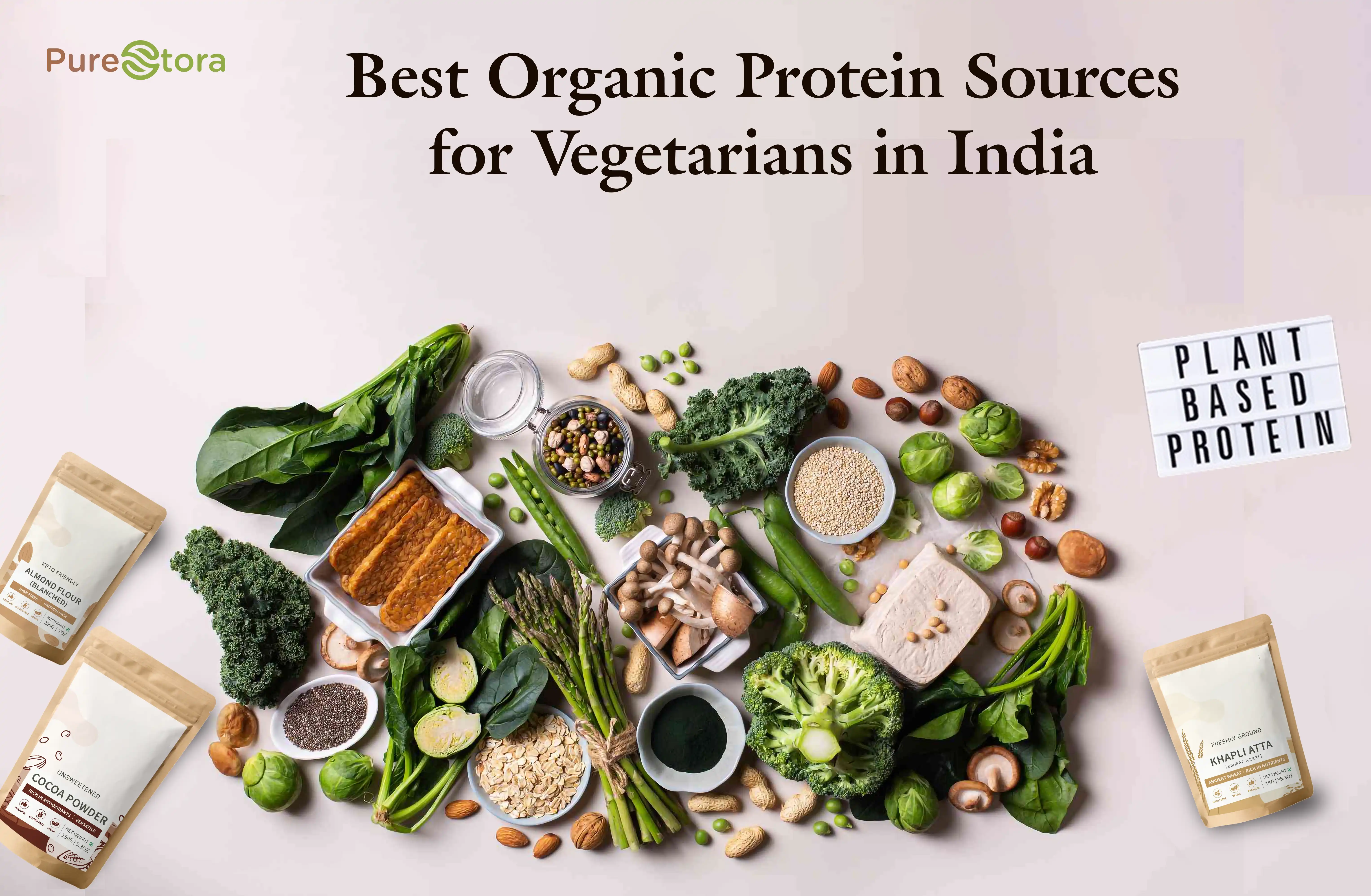
Most Indian vegetarians eat enough carbohydrates. Protein is the real gap — and it shows up as fatigue, slow recovery after exercise, and constant hunger an hour after eating. If you're looking to fix that with genuinely clean sources, PureStora's certified organic food products include pulses, millets, nuts, and seeds — each verified for certification before being listed.
Quick Answer: The best organic protein sources for vegetarians in India are pulses (masoor dal, chana, moong — 22–25g protein per 100g dry weight), organic nuts and seeds (almonds, pumpkin seeds — 19–21g per 100g), organic millets (ragi, jowar — 7–11g per 100g), and plant-based protein powders (pea protein — up to 80g per 100g of powder). According to ICMR dietary guidelines, adults need 0.8–1g of protein per kg of body weight daily — for a 65kg person that's 52–65g per day minimum.
Why Organic Matters for Protein Foods Specifically
When you eat pulses, nuts, or grains to meet your protein needs, you eat them in large quantities — often twice a day, every day. At that volume, pesticide residue accumulates faster than it would from occasional consumption.
FSSAI's organic certification standard specifically restricts synthetic pesticides and fertilisers. Certified organic pulses, millets, and seeds are meaningfully cleaner than their conventional equivalents — not because organic farming is perfect, but because the certification requires third-party verification of farming practices before a product can carry the mark. For daily staples consumed in large quantities, that verification matters more than it does for occasional foods.
For more on whether the organic premium is actually worth paying, see our post on whether organic food is worth the price in India.
1. Organic Pulses and Lentils — 22–25g protein per 100g (dry)
Dal is not comfort food. It is one of the most protein-dense foods available to Indian vegetarians — and it's been sitting in every Indian kitchen for centuries. The numbers are real:
- Masoor dal (red lentils): approximately 25g protein per 100g dry weight
- Chana dal (split chickpea): approximately 22g protein per 100g
- Moong dal (split green gram): approximately 24g protein per 100g
- Rajma (kidney beans): approximately 22g protein per 100g
Most Indian households cook dal twice a day. That makes it the highest-impact daily protein decision you can make. Choosing organic here — where the food is consumed in the largest quantities — gives you the best return on the premium you pay.
How to choose: Look for FSSAI Organic or India Organic (Jaivik Bharat) certification mark on the packet. Avoid any brand using "farm-fresh" or "natural" without a certification mark — these are unregulated terms. At PureStora, every vendor submits certification documentation before any product is listed.
2. Organic Millets — 7–11g protein per 100g
Ragi, jowar, and bajra are having a major resurgence in Indian kitchens — and for good reason. They are gluten-free, carry more protein than white rice, and have a significantly better amino acid profile when combined with pulses.
- Ragi (finger millet): approximately 7–8g protein per 100g — also the highest calcium content of any grain
- Jowar (sorghum): approximately 10g protein per 100g
- Bajra (pearl millet): approximately 11g protein per 100g
- Kodo millet: approximately 11g protein per 100g — low glycaemic index, trending in 2026 searches
The protein in millets is not complete on its own — it lacks some essential amino acids. But when combined with dal (rice + dal or roti + dal), the combination covers all essential amino acids. This is exactly how traditional Indian meals were always structured — the nutritional logic was right all along.
Ragi in particular is getting significant attention in 2026 as a millet-based protein and calcium source, especially among South Indian households. Social media searches for ragi recipes have grown sharply.
3. Organic Nuts and Seeds — 15–30g protein per 100g
Nuts and seeds are calorie-dense but protein-efficient. For vegetarians who struggle to hit daily protein targets through meals alone, they are the most practical snack-time fix.
- Almonds: approximately 21g protein per 100g
- Pumpkin seeds: approximately 19–30g protein per 100g — one of the highest plant-based protein densities available
- Chia seeds: approximately 17g protein per 100g — also rich in omega-3 fatty acids
- Flax seeds: approximately 18g protein per 100g
- Walnuts: approximately 15g protein per 100g
Organic certification matters here because conventional nut and seed crops are often heavily sprayed. Look for FSSAI Organic or India Organic marks before purchasing.
PureStora's certified organic nuts and berries mix is a clean, ready-to-eat option for hitting both protein and healthy fat intake between meals — without added sugar or synthetic preservatives.
4. Organic Quinoa — 14g protein per 100g (complete protein)
Quinoa is one of the very few plant-based complete proteins — meaning it contains all nine essential amino acids. For vegetarians, this is significant because most plant proteins are incomplete and require combining.
A 60g dry serving of quinoa delivers approximately 8–9g of complete protein. Use it as a rice substitute, add it to khichdi, or stir it into a salad. It absorbs spices well and works in most Indian preparations that use rice.
It is more expensive than other grains — typically ₹300–600 per 500g for certified organic quinoa. But for a complete amino acid profile in a single ingredient, the price is justified for anyone tracking protein seriously.
5. Organic Tofu — 8–15g protein per 100g
Tofu is underused in Indian kitchens. Made from soy milk, it absorbs spices well and works in everything from bhurji to curries to stir-fries. High-protein firm or extra-firm tofu gives 12–15g protein per 100g. Silken tofu is lower at around 8g but blends well into smoothies and dips.
Organic tofu is made from non-GMO soybeans — important because a significant proportion of conventional soy is genetically modified. When buying, look for both FSSAI Organic certification and a non-GMO label on the packaging.
6. Organic Moringa — 27g protein per 100g (dried powder)
This surprises most people. Dried moringa leaf powder contains more protein per gram than most pulses — approximately 27g per 100g. You typically consume it in small quantities (5–10g per serving), so it functions as a daily nutritional booster rather than a primary protein source.
What makes moringa particularly valuable for vegetarians is its micronutrient profile. It is rich in iron, calcium, and vitamin C — all nutrients that vegetarians commonly struggle to get in adequate amounts. Research published on PubMed indicates that vitamin C significantly improves non-heme iron absorption from plant sources — which means moringa's vitamin C content makes its own iron more bioavailable.
PureStora stocks certified organic moringa leaf powder from audited vendors. Stir a teaspoon into warm water, dal, or a morning smoothie daily.
7. Organic Plant-Based Protein Powders
For vegetarians with higher protein requirements — gym-goers, athletes, people recovering from illness, or anyone who cannot consistently hit targets through whole foods — organic plant-based protein powders fill the gap cleanly.
- Pea protein: approximately 75–80g protein per 100g of powder — high protein density, good amino acid profile
- Brown rice protein: approximately 70–80g per 100g
- Hemp protein: approximately 50g per 100g — lower protein but adds omega-3 fatty acids
- Peanut protein isolate: approximately 45–55g per 100g — affordable, Indian-familiar flavour
What separates organic plant protein powders from conventional ones: no synthetic additives, artificial sweeteners, or chemical processing agents. Read the ingredient list — if you cannot identify every ingredient, that is a signal to check further.
PureStora carries certified organic peanut protein isolate — a clean, Indian-friendly protein powder that works well in smoothies, rotis, or post-workout shakes without artificial flavouring.
How Much Protein Do You Actually Need?
ICMR recommends 0.8–1g of protein per kg of body weight per day for sedentary adults. For active individuals doing strength training or regular exercise, research suggests 1.2–1.6g per kg is more appropriate for muscle maintenance and recovery.
For a 65kg vegetarian adult — that is 52–65g protein per day at minimum, and up to 104g if active. Most Indian vegetarian diets, even decent ones, fall short of 50g daily without intentional planning. The gap is real — and it shows up as fatigue and slow recovery more than anything dramatic.
Practical daily protein targets using organic sources:
- 2 bowls of dal (cooked) — approximately 18–22g protein
- 1 handful of mixed nuts and seeds — approximately 8–10g protein
- 1 cup cooked quinoa — approximately 8g protein
- 1 teaspoon moringa powder — approximately 2–3g protein
- 1 scoop pea protein powder — approximately 20–25g protein
That combination gets a 65kg active person to 56–68g — within the right range without any meat, eggs, or artificial supplementation.
Frequently Asked Questions
What is the highest protein vegetarian food available in India?
Dried pulses like masoor dal and moong dal contain 24–25g of protein per 100g dry weight and are the most accessible high-protein options for Indian vegetarians. Pumpkin seeds and pea protein powder have higher absolute protein percentages but are typically consumed in smaller quantities. For daily diet impact, pulses win on both protein content and cost-efficiency.
Are organic pulses more nutritious than regular pulses?
The protein content is similar. The key benefit of organic pulses is the absence of synthetic pesticide residue — which matters more when consuming pulses in large daily quantities as a primary protein source. If you eat dal twice a day every day, choosing organic makes a measurable cumulative difference in pesticide exposure.
Can vegetarians build muscle with only plant-based protein?
Yes — research consistently shows that plant-based protein, when consumed in adequate quantity and variety, supports muscle protein synthesis comparably to animal protein. The key is hitting total daily protein targets (1.2–1.6g per kg for active people) and combining sources to ensure all essential amino acids are covered. Browse PureStora's certified organic supplements and superfoods for clean plant-protein options.
How do I verify if an organic protein food is genuinely certified in India?
Look for the FSSAI Organic or Jaivik Bharat (India Organic) certification mark on the individual product packaging — not just on the brand's website or outer box. Check for the FSSAI licence number on all packaged food. "Natural," "chemical-free," and "farm-fresh" are unregulated terms in India and require no proof. Only the third-party certified marks carry verified weight.
Conclusion
The protein gap in Indian vegetarian diets is real, fixable, and does not require imported superfoods or expensive supplements. Pulses, millets, nuts, seeds, and moringa — foods already rooted in Indian cooking — cover most of the gap when chosen in certified organic form and consumed consistently. For Ayurvedic superfoods that complement your protein intake with broader nutritional support, see our guide on Ayurvedic superfoods to add to your daily diet.
Disclaimer: This article is for general informational purposes only and is not a substitute for medical or nutritional advice. Nutritional values are approximate and may vary by variety, brand, and processing method. Consult a qualified nutritionist for personalised dietary guidance.
