
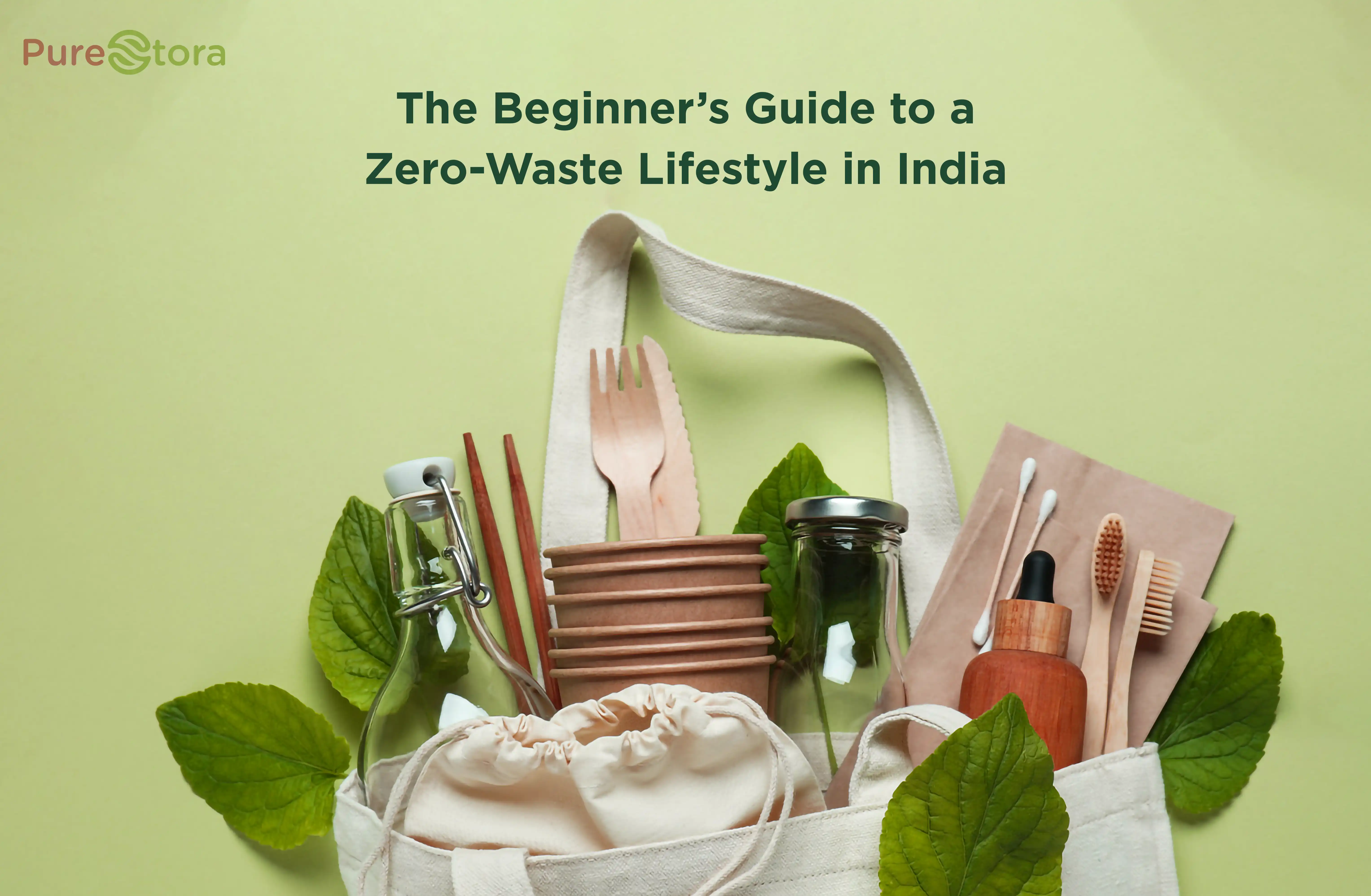
India generates over 62 million tonnes of waste annually — and a significant portion of that comes from individual households making daily purchasing and disposal decisions. The zero-waste movement is not about perfection. It is about systematically reducing waste generation at the source, room by room, habit by habit. For Indians specifically, this is both an environmental decision and a return to practices that Indian households followed for generations before single-use plastics became ubiquitous. PureStora's zero-waste product range carries reusable and natural alternatives across every category in this guide — each vendor verified before listing.
Quick Answer: Starting a zero-waste lifestyle in India involves five practical areas: refusing single-use plastics, switching to reusable alternatives in the bathroom and kitchen, composting food waste at home, buying groceries in bulk or from unpackaged sources, and choosing products with minimal or compostable packaging. India's Plastic Waste Management (Amendment) Rules, 2026 — notified in March 2026 — now mandate recycled content in plastic packaging and decentralise enforcement to local bodies, making the shift to zero-waste products both easier and more relevant than before. The most important principle: progress over perfection. A household that eliminates 60% of its plastic use is doing far more than one that aims for 100% and gives up.
Why This Matters Specifically in India
India contributes 9.3 million tonnes of plastic waste annually, with nearly 40% coming from single-use plastics. Municipal waste infrastructure in most Indian cities processes only a fraction of this — the rest ends up in open dumping grounds, waterways, or is burned, contributing significantly to urban air pollution.
The Indian context also has a uniquely positive angle: India's traditional household practices were already largely zero-waste before plastics arrived. The dabbawala system, the use of steel tiffin boxes, buying loose grains from kirana stores in cloth bags, composting kitchen waste in gardens, using dhobi ghats instead of synthetic detergents — these were all zero-waste practices. The zero-waste movement in India is less about adopting something foreign and more about recovering habits that were abandoned in the last 40 years under the influence of convenience culture and cheap plastics.
Additionally, India's informal waste collection system — the kabadiwala network — is one of the most efficient informal recycling systems in the world. Understanding how to use it is as important as buying reusable products.
The 5 Rs Framework — Adapted for India
The global zero-waste framework uses five principles, in priority order:
- Refuse — say no before the waste enters your home. Refuse plastic bags at the counter, single-use straws at restaurants, unnecessary packaging at kirana stores. This is the highest-leverage step — prevention beats recycling every time.
- Reduce — buy less, buy better. A stainless steel bottle that lasts 15 years creates less total waste than 5,000 single-use plastic bottles. Quality over quantity is inherently zero-waste.
- Reuse — use what you have longer. Repurpose old cotton saris as kitchen towels. Use glass jars for storage. Repair before replacing.
- Recycle — only after the first three. Most Indians believe recycling solves the plastic problem. It does not — only about 20% of plastic in India is effectively recycled. Recycling is the last resort, not the solution.
- Rot — compost organic waste. In Indian homes where food waste makes up 50–60% of total household waste, composting is one of the single highest-impact zero-waste practices available.
Step 1 — The Bathroom (Start Here)
The bathroom generates more plastic waste per square foot than any other room in the house. Shampoo bottles, conditioner bottles, body wash bottles, toothpaste tubes, razor cartridges — most households throw away dozens of plastic containers annually from this single room.
Practical switches that actually work in Indian conditions:
- Bamboo toothbrush — identical function to a plastic one. The bamboo handle is compostable (the nylon bristles still need to be removed and recycled separately, but the handle goes in compost). Cost is comparable — ₹50–150 per brush.
- Shampoo bar — a solid bar that replaces liquid shampoo. One bar typically lasts as long as 2–3 bottles of liquid shampoo. Zero plastic packaging. Look for bars without SLS (sodium lauryl sulphate) and with a full, readable ingredient list.
- Safety razor — a single stainless steel handle that lasts a lifetime; only the thin blade is replaced. Blade packs are sold in paper packaging. Long-term cost is significantly lower than cartridge razors.
- Natural bar soap — replaces liquid body wash in a plastic pump bottle. Traditional Indian soap (Mysore Sandal, neem soap) has always been sold in paper-wrapped bars — this is not a new concept.
- Menstrual cup or cloth pads — replaces monthly disposable products. A menstrual cup lasts 5–10 years. Cloth pads are washable and reusable for years. Both require an adjustment period but eliminate 100% of menstrual plastic waste.
India-specific tip: Multi-use oils (coconut oil, almond oil) replace several bathroom products at once — makeup remover, moisturiser, hair oil, and beard oil. This is traditional Indian practice and generates near-zero packaging waste.
Step 2 — The Kitchen (Highest Impact Room)
The kitchen is where most household waste is generated and where the most impactful changes can be made. In India specifically, the kitchen is also where traditional zero-waste practices were strongest — and most easily recovered.
Groceries:
- Buy rice, dal, flour, and spices loose from your local kirana store using your own steel or cloth containers — this is how India bought groceries for generations. Most kirana stores will happily weigh and fill your containers.
- Use a cloth jhola or jute bag for all grocery runs — keep one hanging by the door so you never forget it.
- Choose produce from local sabzi vendors over supermarket produce in plastic trays — the kabadiwala village-sourced vegetable carts generate zero packaging waste.
Food storage:
- Replace plastic containers with stainless steel dabbas or glass jars for storage. Indian kitchens traditionally used steel for everything — this is recovery, not revolution.
- Beeswax wraps or damp cloth covers instead of cling film for covering bowls.
- Silicone storage bags or reusable cloth bags for snacks and dry goods.
Cooking:
- Cast iron or stainless steel cookware instead of non-stick with damaged coating.
- Bamboo or wooden cooking utensils instead of plastic spatulas that degrade and shed microplastics into food.
- Compost all food scraps — see Step 4 for how to do this in an Indian urban context.
For certified organic groceries with minimal or compostable packaging, see our guide on the best organic grocery items for Indian kitchens.
Step 3 — Clothing and Textiles
Fast fashion is one of the most waste-intensive industries in the world. India is both a major producer and an increasingly significant consumer. The zero-waste approach to clothing involves three principles: buy less, buy better, keep longer.
- Buy less: The most zero-waste item of clothing is the one you already own. Before buying anything new, check whether something you already have can serve the purpose.
- Buy better: When buying, choose natural fibre (cotton, linen, wool, silk) over synthetic (polyester, nylon, acrylic). Synthetic fibres shed microplastics in every wash — natural fibres do not. Handloom cotton and khadi are India's most sustainable textile options: naturally dyed, hand-woven, and durable.
- Keep longer: Repair, mend, and repurpose. Old cotton kurtas become kitchen towels or floor cloths. Old saris become quilts or bag lining. The concept of jugaad — creative repair — is inherently zero-waste.
When you must dispose: Donate usable clothing to local NGOs or rag-pickers. Worn-out cotton clothing can be composted (natural fibres only). Synthetic clothing cannot be composted — it should go to a textile recycler.
Step 4 — Composting at Home in India
Composting is one of the most impactful zero-waste practices for Indian households because food waste makes up the majority of municipal solid waste in India. Most composting guides are written for homes with gardens — here is how to compost in Indian urban conditions.
Apartment composting options:
- Balcony composter — a tiered clay pot or plastic bin system where food scraps are layered with dry material (dried leaves, shredded newspaper, sawdust) and left to decompose. Takes 45–60 days. Odourless when managed correctly. The resulting compost can be used for balcony plants.
- Khamba (clay pot composter) — a traditional Indian clay pot stacking system specifically designed for urban composting. Three pots are stacked vertically; food waste fills from the top and mature compost is collected from the bottom over 45–90 days.
- Community composting — many Resident Welfare Associations (RWAs) in Hyderabad, Bengaluru, Pune, and Mumbai have community composting facilities. Check with your RWA or local municipal corporation.
What to compost: Vegetable peels, fruit scraps, cooked food without oil (in small quantities), tea leaves, coffee grounds, eggshells, shredded newspaper, cardboard.
What not to compost: Meat, fish, heavily oiled food, synthetic materials, dairy in large quantities.
The kabadiwala system: For dry waste — paper, cardboard, metal, glass, and some plastics — the kabadiwala is India's most efficient recycling system. Regular kabadiwala pickups typically cover paper, cardboard, metals, and PET bottles (plastic code 1). Keep a dedicated dry-waste bag and call your kabadiwala when it is full.
Step 5 — Personal Care and Cleaning Products
Conventional personal care and cleaning products generate significant plastic waste and release VOCs (Volatile Organic Compounds) into your indoor air. The zero-waste version of this shift reduces plastic packaging and synthetic chemical load simultaneously.
Key switches that are practical in Indian conditions:
- Multipurpose cleaners — neem-based or citric acid cleaners in concentrate form (dilute before use) significantly reduce packaging versus buying separate products for every surface.
- Shampoo and soap bars — as above, these eliminate plastic bottles from personal care entirely.
- Cloth cleaning rags — replace paper towels and disposable kitchen wipes. Old cotton T-shirts cut into squares are ideal.
- Reusable mop heads — replaceable cotton mop heads instead of disposable floor wipes.
For a full breakdown of synthetic chemicals to avoid in household products and what to replace them with, see our guide on certified organic personal care products.
Step 6 — Shopping and Packaging
Most household plastic waste enters through grocery shopping and e-commerce packaging. Addressing the source is more effective than trying to manage the packaging after it arrives.
For grocery shopping:
- Carry your own bags — a cotton jhola or jute bag for loose items, mesh produce bags for vegetables and fruits.
- Prefer loose over packaged wherever possible — most Indian kirana stores sell loose grains, pulses, and spices.
- Buy glass-packaged over plastic-packaged when loose is not available — glass is infinitely recyclable; plastic is not.
For e-commerce:
- Consolidate orders — fewer deliveries means less packaging. Waiting to combine items into one order is one of the most practical e-commerce waste reductions.
- Leave packaging feedback — most major e-commerce platforms now have feedback mechanisms for excess packaging. Use them.
- Return packaging — some platforms now accept packaging returns for reuse. Check before discarding.
Step 7 — Festivals and Gifting
Indian festivals are one of the largest per-capita waste generation events globally. Diwali alone generates an estimated 936,000 tonnes of extra waste in three days — much of it from synthetic gift packaging, thermocol trays, and single-use decorations.
Practical zero-waste festival switches:
- Clay diyas over plastic or metal decorative lights — biodegradable, traditional, and supports local potters
- Natural rangoli using turmeric, rice flour, and flower petals instead of synthetic colour powders
- Reusable cloth gift wrapping instead of synthetic ribbon and non-recyclable foil paper
- Organic food hampers in jute or cotton packaging instead of synthetic-wrapped conventional gift boxes
For a full guide to eco-friendly festival gifting in India — including what certifications to look for and how to avoid greenwashing in sustainable gift claims — see our post on eco-friendly gifts for Indian festivals.
The Realistic India-Specific Challenge
Zero-waste living in India comes with genuine infrastructure challenges that Western guides do not account for:
- Inconsistent waste segregation at municipal level — many Indian cities do not separate wet and dry waste at the collection point even when you segregate at home. This does not make home segregation pointless — it creates pressure for better municipal systems and ensures your dry recyclables reach the kabadiwala before collection.
- Limited availability of bulk buying options — outside of kirana stores (which are excellent for staples), bulk grocery stores are scarce in most Indian cities. This is improving but is still a genuine gap.
- Packaging by delivery apps — Swiggy, Zomato, Blinkit, and Zepto generate enormous plastic packaging. Choosing dine-in, cooking at home, or requesting "no cutlery" and "minimal packaging" in delivery app notes helps at the margin.
- Social pressure at festivals — choosing clay diyas at Diwali or refusing thermocol gift trays at family events requires social navigation. This is real and worth acknowledging rather than pretending it does not exist.
A Month-by-Month Starter Plan
Do not try to change everything at once. This creates overwhelm and leads to giving up.
- Month 1: Bathroom swaps. Replace one plastic product as it runs out — start with the next item that empties. Bamboo toothbrush first. Then shampoo bar when the current bottle finishes.
- Month 2: Kitchen bags and containers. Get a cloth jhola, two or three mesh produce bags, and a set of steel dabbas. Use them consistently for two weeks until the habit sets.
- Month 3: Start composting. Set up a balcony composter or khamba. The first 30 days are the steepest learning curve — after that it becomes automatic.
- Month 4: Tackle cleaning products. Replace surface cleaner and laundry detergent with plant-derived alternatives.
- Month 5 onwards: Evaluate, adjust, and extend. What worked? What did not? Where is the most packaging still coming from? Focus next efforts there.
Frequently Asked Questions
How do I start a zero-waste lifestyle at home in India with minimal investment?
Start with what you already have. Use cloth bags from old saris, glass jars from finished products as storage containers, cotton rags from old T-shirts as cleaning cloths. The zero-waste lifestyle does not require buying a set of "eco-friendly products" — it requires using what you have longer and refusing new single-use items from entering your home. When you do need to replace something, choose the reusable version. The only upfront investment worth making in the first month is a cloth bag and a bamboo toothbrush.
Is composting practical in an Indian apartment without a garden?
Yes — the khamba (clay pot composter) and balcony compost bin are specifically designed for Indian urban apartment living. Both are odourless when managed correctly with a ratio of 3 parts dry material to 1 part food waste. The resulting compost is usable for balcony plants or can be shared with a local urban garden or RWA green space. Many Indian cities also have community composting facilities through Resident Welfare Associations — check with yours.
What are the easiest zero-waste swaps for daily use in India?
In order of ease: cloth bag for grocery runs, steel water bottle instead of single-use plastic, bamboo toothbrush when your current one finishes, bar soap instead of liquid body wash, steel tiffin box for lunch. None of these require significant habit change — they are one-time switches that then run on autopilot. Browse PureStora's natural home essentials range for verified reusable products across these categories.
How does the kabadiwala system fit into zero-waste living?
The kabadiwala is India's informal but highly efficient dry-waste recycling network. They collect paper, cardboard, metal, glass, and certain plastics (particularly PET — the code 1 plastic used in water bottles) and route them into the recycling supply chain. For a zero-waste household, the kabadiwala handles everything you cannot compost and cannot refuse — keep a dedicated dry-waste collection bag, segregate it from wet waste, and call your kabadiwala when it is full. This system is genuinely more efficient than most formal recycling systems globally.
Conclusion
Zero-waste living in India is not a Western concept grafted onto Indian culture — it is a recovery of practices that Indian households maintained for generations before cheap plastics displaced them. Steel dabbas, jute bags, clay pots, bulk kirana purchasing, the kabadiwala — the infrastructure for zero-waste living in India already exists. The shift is primarily about choosing to use it over the single-use plastic alternative. Start with the bathroom, move to the kitchen, set up composting, and the rest follows. For more on reducing synthetic chemical exposure through your household product choices, see our guide on switching to chemical-free household products.
Disclaimer: This article is for general informational purposes only. Waste management infrastructure and available products vary by city and region across India. Local municipal guidelines should be consulted for waste segregation and disposal rules in your specific area.
